Archives for February 2012

Digging In: The Primal Patterns and You

Here’s a quick recap of the six Primal Movement Patterns that almost every human movement can be broken down into:

  • Squat/Lift
  • Lunge
  • Push/Pull
  • Twist
  • Gait
  • Balance

As promised, we’ll briefly discuss each movement in general terms and then give you examples of when you’re likely doing it. After, we’ll summarize some of the common faults and some quick fixes that may help resolve some of those movement related issues.

Squat/Lift: The squat/lift pattern is one of the most commonly recognized patterns out there. It involves bending through the knees and hips with the feet staying in the same relative position. We recognize it in young babies even before they start learning to stand upright. We can see the squat motion as they lie on their backs kicking their legs out together, over and over, building up strength for when they need to be able to do it against gravity. As we grow up, it’s how we sit down, stand up, pick groceries off the floor, and go for that massive 360 reverse slam dunk (jumping off two feet) over top of Shaquille O’Neill.
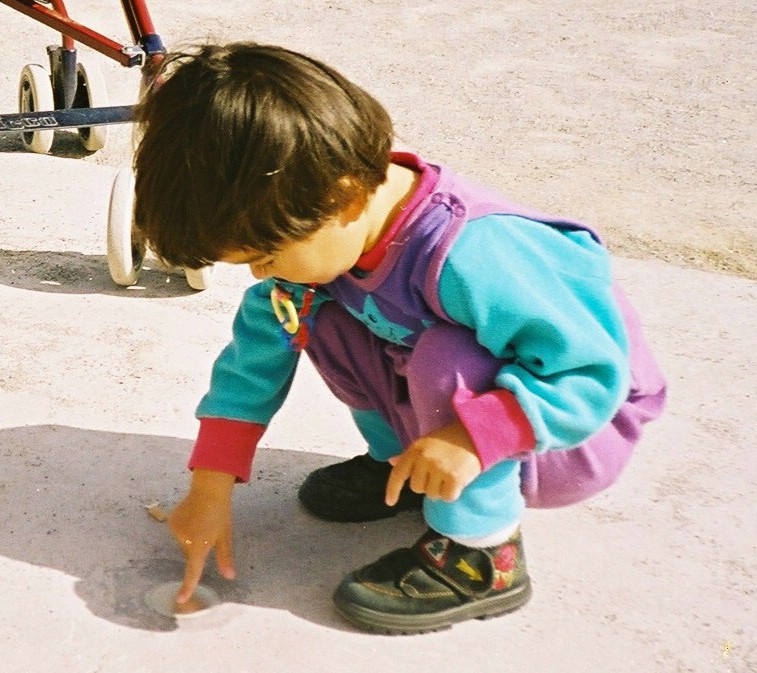
Lunge: The lunge pattern can be broadly described as stepping forward, backwards, to the side, or to any angle between them. While similar to the squat pattern, the difference is that one leg moves away from the other. We use this pattern when we dodge oncoming pedestrian traffic on Yonge Street (side-stepping the bankers engrossed in their Blackberries), stepping back from the yellow line when the subway car pulls into the station (so we don’t lose the tip of our nose), and even when we “step” into our cars, to a certain extent.
Flickr - chascow - ana lunges

Push/Pull: This Primal Pattern can be described as any pushing or pulling motion. It can be directed vertically, horizontally or on any plane in between. In daily activities, this can be seen when we are opening or closing doors, dragging our suitcases behind us, or pushing a grocery cart at the store.

Twist: Twist, or torque, refers to our ability to create rotational forces. Torque is created through our bodies when we chop wood, swing a golf club, or complete any other similar type activity.

Gait: This represents our movement strategies: it’s how we get from one place to the next. It can include crawling, walking, and running to name a few.
Skeleton walk02Balance: Balance is our ability to maintain our centre of gravity with as little excess movement, or sway, as possible. We balance our bodies when we stand up. We balance as a component of our walking. This is an integral movement pattern that allows us to avoid falling down and is often used in combination with other movement patterns.

A few common faults across all categories:

  • Excessive movement through the spine (e.g. flexing forward through low back, twisting excessively with golf swing)
  • Improper or uneven weight distribution (e.g. weight shifted to one foot or the other, weight shifted forward/backward)
  • Faulty body positioning with pushing or pulling a load (e.g. shoulder hiked when dragging suitcase)
  • Not actually using the right muscles/joints to complete a movement pattern (e.g. “plopping” down into a chair)
  • Altered or compensated gait pattern (e.g. limping, excessive pelvis rotation etc)
  • Poor balance levels (e.g. inability to control body sway when standing on one foot)

The Fixes:

  1. Education: If you’re having problems, learn what pattern is being done incorrectly. Learn how to stop it. And learn how to replace it with a better, safer one that protects your body. Or at the very least, doesn’t wear it down as quickly. If you’re not having any problems, prevent them from happening in the future.
    • Find out what’s got you in pain, or keeping you in pain (e.g. the way you bend through your back every day)
    • Find out how you can avoid injuries or dysfunctions (e.g. keep your bones and muscles strong as you age)
  2. Motor Control: Train your body to consistently move better.
    • Fix poor postures (e.g. slouch at computer desk)
    • Improve mobility/stability (e.g. loosen up immobile hips, stabilize spine)
    • Reduce or eliminate imbalances (e.g. stretch tight muscles, strengthen weak muscles)
    • Re-train faulty movement patterns (e.g. improper squats, excess twisting through spine with golf swing)
  3. Get in shape: Train your body to tolerate these various stresses. Improve your level of conditioning.
    • Push your cardiovascular system to its potential
    • Build your strength, power, and endurance to their highest levels of performance
    • This can be done with any physical activity you enjoy: running, biking, swimming, weights or sports.
    • Just get active and start!

The Primal Team

Primal Patterns: How Do You Stack Up?

I don’t know about you, but we at Primal Human Performance take our biomechanics very seriously.

We don’t just go to the mall to hang out, we go to watch, observe, and learn from the huge variety of movement patterns people have; all of these patterns vying to complete typical daily tasks from walking to carrying groceries, to going up and down stairs.

In actuality though, if you deconstructed every single of movement that we humans use throughout the day, you’ll notice that there are simply just a few Primal Patterns that keep cropping up, either independently, or in combinations with each other.

Dr. Stuart McGill, one of the world’s premier spine researchers, describes (by describe, I mean lists) them as follows:

•    Squat/Lift
•    Lunge
•    Twist
•    Push/Pull
•    Gait
•    Balance

Now what if you did one of these, or a few of these, incorrectly?

And what if you repeated that faulty pattern over and over again without even knowing it, day after day, week after week, year after year?

What if your compensation movements just so happened to be in your low back? Or your shoulder? Or your knee?

Perhaps every time you sit down in a chair?

Or every time you go out for a run or lift weights at the gym?

Or every day as you sit in your car, wait for the bus, or do what you do at work?

Gold star for you if you’ve come to the conclusion that maybe, just maybe, your faulty movement pattern may be wearing your body down before its time.

You only have one body. Be nice to it.

Fix your faults.

In the next series of posts, we’ll go through a couple of simple exercises that you can easily incorporate into your day to work on each of the 6 Primal Movement Patterns listed above.

Yours in Optimal Health and Ultimate Performance.

Team Primal

Rehab and Performance: Can the Two Co-Exist?

You were super active up until the moment you got injured.

You might have twisted your ankle stepping off a curb while out on a 10K run. Or your knee buckled underneath you while you were hitting the slopes hard. You may have tweaked your low back while playing horsie with the kids. Or maybe you pinched your shoulder reaching into the back seat of the car to grab your purse.

Whatever the body part, something bad happened. And things suddenly changed.

You know what usually happens next, right?

“I’ll take a few days to let it rest, it should clear up.”

Maybe a little ice. A couple ibuprofen. A tensor wrap here, a hot pack there. Some Tiger Balm. And a big glass of red wine.
For some, that’s all it’ll take and things will clear up. They’ll be back to their everyday activity, pushing the limits, and living life. The pain, the dysfunction, and the misery will be nothing more than a long forgotten memory.

For the unlucky few, it unfortunately doesn’t work out that way. Things stay the same, or they get worse. More pain. Less movement. Weakness. Decreased function and performance.

Out comes the Ben & Jerry’s, on goes the TV, and the moping begins.

“Why me?”

“Why won’t this heal? Why won’t it get better?”

And here begins the sad, downward spiral of the once lofty fitness goals and aspirations.

The running stops cold. They gym, heck, that could be on another planet! Even the kids will have to wait till you feel better to play with them.

Limping. Hobbling. Shuffling. Modifying how you do things.

“Exercise?! Are you kidding me, I’m injured!”

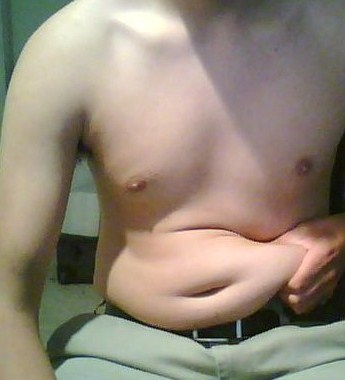
Days grow into weeks. You feel your once toned muscles soften like freshly kneaded dough. Your shape slowly shifting, growing at the paunch almost imperceptibly at first, but then quickly gaining steam.

The couch, which remarkably wasn’t made of memory foam, has developed new physical properties, and has somehow molded to your new and expanding body contours. Like a plush glove that embraces you, welcoming you, caressing you. Bidding you to stay for a while.

Your motivation levels drop. Depression creeps in. It gets harder and harder to even do little things. You’re on edge. Your mind’s not as sharp and clear as it used to be. You feel anxious without even knowing why. Restless like a caged animal that needs to let off steam.

You realize that you miss your former active self; enough is finally enough.

You’ve realized that nothing truly changes if nothing changes.

“That’s it, I’m going to get ________(insert injured body part here) fixed!”

You dutifully look up your physiotherapist/chiropractor/massage therapist (insert your injury rehab professional here) and call them up and get booked in for your treatment.

You diligently go through your rehab and at the end of it all, you are free from pain, you have your range of motion, and your strength is coming back.

You’re now just a softer and weaker, albeit pain-free, version of your old injured self.

Discharged from therapy, you start from ground zero again to build yourself back up. Step by slow step. For most people, that’s almost as daunting and depressing as being injured!

What if there were another way?

What if, during your rehab, you actually IMPROVED your fitness? What if you shed a few of those injury pounds? What if, at the end of your treatment plan, you were able to perform at, or beyond, the level you were at BEFORE you got injured?

At Primal Human Performance, we believe that the above should be part of every injury rehab treatment plan. We believe that your injury treatment should not merely cover the bases, but should empower you to attain physical peaks you didn’t think possible.

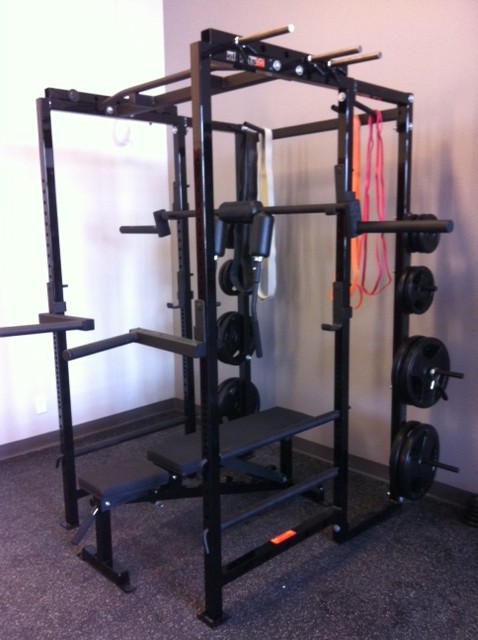
That’s why as soon as you’re body is ready, we’ll have you in our high performance gym, pushing, pulling, squatting, lunging, crawling, and throwing your way to optimal health and ultimate performance.

Who says you can’t rehab an injury while improving your performance at the same time?

Team Primal